
Learning from East Asia, India must reform its district administration with performance, accountability, and vision to achieve the goal of Viksit Bharat, points out Deepak Mishra.

The Enforcement Directorate has summoned Reliance Group Chairman Anil Ambani for questioning in a money laundering case linked to alleged bank loan fraud.

Reliance Industries, construction major L&T and IRB Infrastructure are some of the top companies that have used an infrastructure investment trust structure to reduce part of their debt and generate returns for their investors. Earlier this month, IRB Infrastructure InvIT was listed on the National Stock Exchange, giving its investors an option to exit by selling their units. The listing came within months of the Securities and Exchange Board of India's (Sebi's) guidelines for conversion of private unlisted InvITs into listed ones were issued.

Only NIIF has stayed the course as a viable infrastructure financing institution.
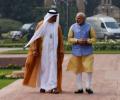
Terming his discussions as 'fruitful and productive', Modi said the discussions were wide ranging, covering the entire spectrum of the bilateral engagement.

The peace plan included that Gaza will be a deradicalised, terror-free zone that does not pose a threat to its neighbours and will be redeveloped for the benefit of the people of Gaza. The peace plan stated that if both sides agree to this proposal, the war will immediately end. Israeli forces will withdraw to the agreed upon line to prepare for hostage release.

The IPO wave of 2025 is here, and it's bigger than ever. From fintech unicorns to financial powerhouses and infrastructure giants, some of India's biggest names are all set to make their stock market debut. PhonePe, Zepto, Tata Capital, NSE, NSDL, and JSW Cement are just a few of the highly awaited listings that have investors and analysts buzzing with excitement.

If he cannot do it this term by using his bureaucracy and experts from different fields, it will be a tragedy, asserts Ramesh Menon.

The raids were linked to a sophisticated organised investment fraud scheme targeting unsuspecting individuals through fake mobile apps and WhatsApp groups.

India will place restrictions on foreign direct investment (FDI) in the national interest to ensure safeguards because of its location in a highly sensitive neighbourhood, Finance Minister Nirmala Sitharaman said during an interactive session at the Wharton Business School in the US on Tuesday. "I cannot blindly accept FDI simply because we need investment, unmindful of where it is coming from. "We want business, we want investment, but we also need some safeguards, because India is located in a neighbourhood that is very, very sensitive," Sitharaman said.

''Now the roads in Bihar are as good as any other Indian state. The power sector has improved.' 'Connectivity, law and order, gender justice...' 'Bihar now stands for all these things that were totally absent when it was under jungle raj.'

'...they always address problems superficially, never tackling root causes.' 'Currently, the policy response will focus on immediate relief -- getting people to safety, providing facilities, clearing debris.' 'This is necessary, but once immediate relief operations end, everything returns to 'normal' without addressing underlying vulnerabilities.'

'Despite being a software powerhouse, we're not producing proportionate original IP, frameworks, or global tech products originating in India.'

Now that almost 10 infrastructure ministries have submitted a fresh list of their core infrastructure assets, the government has realised it stands to make much more money from asset monetisation than previously thought. Two persons in the government said it stood to garner over 30 per cent more than the earlier estimates of Rs 2.5 trillion over the next four years under the National Monetisation Pipeline (NMP). The NMP, which is being prepared by Niti Aayog, is in the advanced stages of finalisation and is expected to be unveiled in August.

Households are likely to remain the primary net lenders to the economy in the coming decades.

NSE Indices Ltd, an arm of the National Stock Exchange (NSE), on Tuesday launched the country's first-ever Real Estate Investment Trusts and Infrastructure Investment Trusts index -- Nifty REITs and InvITs Index. The index aims to track the performance of REITs and InvITs that are publicly listed and traded on the NSE, the exchange said in a statement. A real estate investment trust (REIT) or an infrastructure investment trust (InvIT) is an investment vehicle that owns revenue-generating real estate or infrastructure assets.

'Pakistan has found itself in a favourable position after Operation Sindoor by appreciating the mediation as claimed by Trump and recommending him for the Nobel Peace Prize.'

Prime Minister Narendra Modi on Wednesday urged all stakeholders to come together and invest in people for skill development, nurturing talent and promoting innovation which are essential for job creation and boosting the economy. Participating in post-Budget webinar on employment, Modi said the government has provided skill training to 3 crore youth since 2014 and decided to upgrade 1,000 ITIs and set up five centres of excellence.
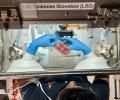
The $1.2 billion in-space manufacturing market is expected to grow and be worth more than $20 billion by 2033.

Highly-rated finance firms and housing finance companies are expected to benefit from the absence of Housing Development Finance Corp (HDFC) from the bond market once it merges with the HDFC Bank in early FY24. Post merger, the bond market is expected to become less crowded, which will ease fund raising conditions for other players in the field. It may perhaps also compress the spread for debt instruments floated by housing finance companies (HFCs) over 10-year government bonds, subject to demand and supply conditions.

In 2024, the Securities and Exchange Board of India (Sebi) implemented significant reforms, focusing on cooling down the derivatives segment, enhancing transparency and accountability in small and midsised enterprise (SME) listings, and deepening the fund management ecosystem.

'Although we are facing constraints related to lending and resource mobilisation, the government is aware of these.'

The Cabinet has cleared a Bill to set up a government-owned development finance institution (DFI) with initial paid-up capital of Rs 20,000 crore so that it can leverage around Rs 3 trillion from the markets in a few years to provide long-term funds to infrastructure projects as well as for development needs of the country. To put it in perspective, Rs 3 trillion constitutes slightly less than 3 per cent of the Rs 111 trillion to be spent on over 7,000 projects in the National Infrastructure Pipeline from 2019-20 to 2024-25. Besides, the government will give Rs 5,000 crore as grant to the institution, Finance Minister Nirmala Sitharaman on Tuesday told the media after the Cabinet meeting.
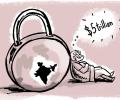
In order to achieve $5 trillion GDP by FY'25, India needs to spend about $1.4 trillion over this period on infrastructure, according to the Economic Survey. During financial years 2008-17, India pumped in about $1.1 trillion on infrastructure. However, the challenge is to step up infrastructure investment substantially, the Economic Survey 2021-22 said.

Finance Minister Nirmala Sitharaman on Tuesday asked fintech firms to focus on risk management at a time when criminals are using AI to mimic voices, clone identities and create lifelike videos to manipulate people.

A United Nations' body has called for greater public and private spending for upgrading critical areas of India's infrastructure, a key driver of the economy, and said a bulk of these investment need to be generated internally.

rediffGURU Nayagam PP, career counsellor and the founder of EduJob360, counsels students and aspiring professionals about how they can make the right career decision.

'India is a big market for StanC, and it is also fastest growing economy in the world.'

About 57 per cent of Indian districts, home to 76 per cent of the country's population, are currently at high to very high risk from extreme heat.
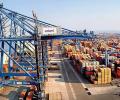
State-owned Life Insurance Corporation (LIC) on Thursday entirely subscribed to the Rs 5,000 crore bond issue of Adani Ports and Special Economic Zone (APSEZ) at a coupon rate of 7.75 per cent, said sources privy to the development.

Terming investment in infrastructure "quintessential" to boost growth, the Economic Survey on Friday said post unlocking of the economy, infra sectors are poised for growth and construction of roads is expected to return to the high pace attained before COVID-19. The infrastructure sector will be the key to overall economic growth and macroeconomic stability, the Survey said emphasising that the year after the crisis (2021-22) will require sustained and calibrated measures to facilitate the process of economic recovery and enable the economy to get back on its long-term growth trajectory. "Basic infrastructure facilities in the country provide the foundation of growth. In the absence of adequate infrastructure, the economy operates at a suboptimal level and remains distant from its potential and frontier growth trajectory.

Budget 2025 lays down a transformational roadmap for India's digital and economic future, focusing on AI-driven enterprise modernisation, workforce skilling, and sustainable innovation. With bold investments in AI, digital infrastructure, and ease of doing business, the government has set the stage for businesses to scale, innovate and compete on a global level.

These are the highlights of the Union Budget 2025-26 presented by Finance Minister Nirmala Sitharaman in Parliament on Saturday.

Despite the benefits of hybrid technology, a lack of government backing and few launches have kept the segment from gaining ground.

Shifting to a PPP model could repeat the errors of the past

It is time for India to raise its voice not just through military prowess, but through professionalism, principled voting and partnerships, asserts Deepak Mishra.
The government should set up a dedicated fund to rescue Indian agriculture.

'The scrapping of import duty would help Indian companies compete in international markets, thus paving the way for India becoming a space manufacturing hub for the world.'

After the success of the National Highways Authority of India's (NHAI's) first infrastructure investment trust (InvIT) with foreign institutional investors, the Centre is working on a proposal to launch a fresh InvIT for national highways, where domestic retail investors can hold units of the trust

India's economy is likely to grow by 6.5 per cent in the current and the next financial year, an EY report said, attributing lower than anticipated expansion in the September quarter to fall in private consumption expenditure and gross fixed capital formation. Real GDP growth eased to a seven-quarter low of 5.4 per cent in July-September -- the second quarter of the current 2024-25 fiscal year.
